
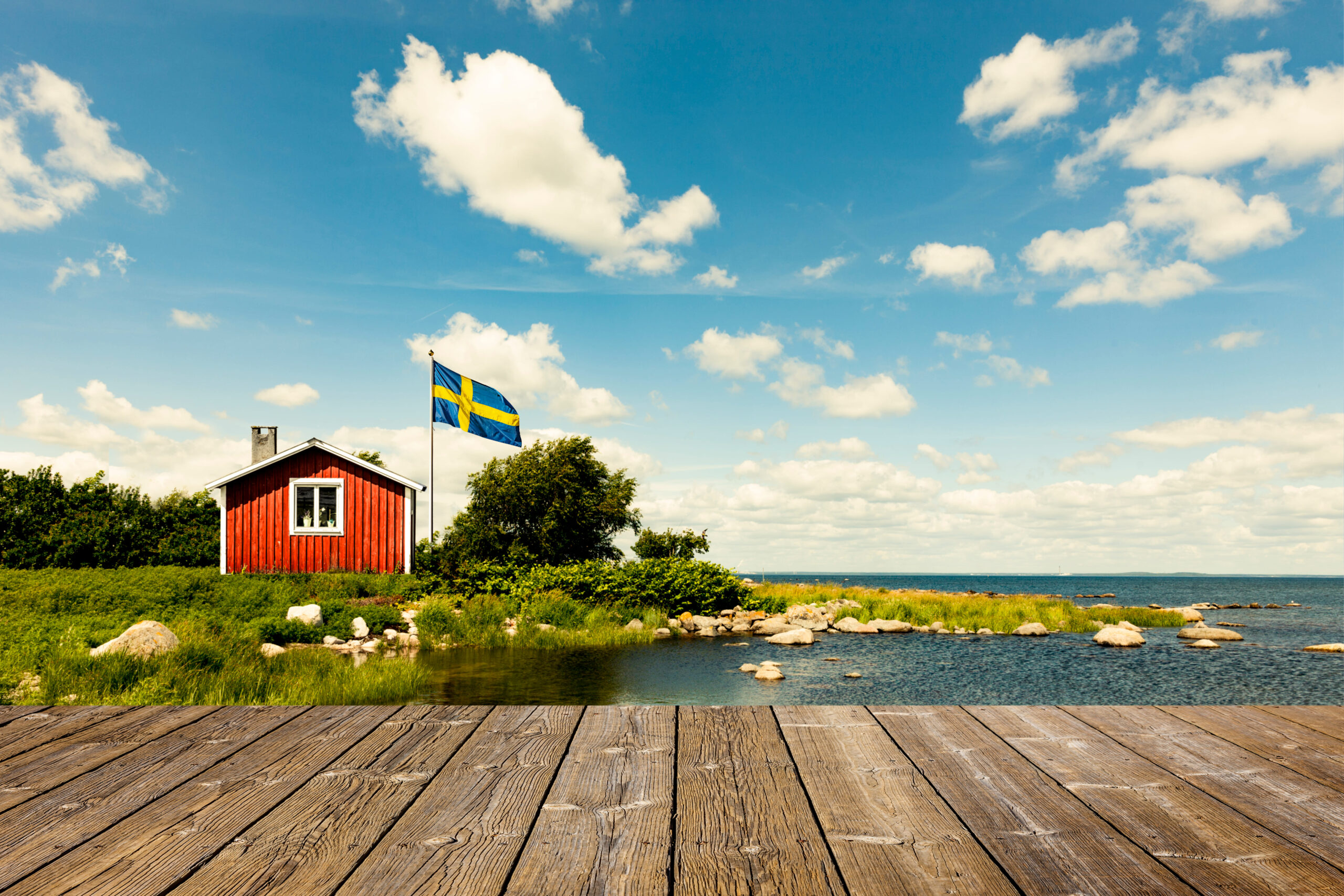
Every year on 14 November, Sweden celebrates the legacy of Astrid Lindgren, one of its most beloved children’s authors. Her unforgettable characters, including Pippi Longstocking, Emil in Lönneberga and Ronja the Robber’s Daughter, have introduced generations of readers to Swedish culture, childhood and imagination.
Astrid Lindgren’s Childhood in the Swedish Countryside
Astrid Lindgren was born on 14 November 1907, on Näs farm near Vimmerby, in the Swedish region of Småland.
Growing up surrounded by forests, meadows and animals, she enjoyed a childhood filled with outdoor adventures and imaginative games. These experiences later inspired books such as The Children of Noisy Village (Barnen i Bullerbyn) and Emil in Lönneberga (Emil i Lönneberga).
The traditional red wooden houses, farms and forests of Småland became iconic settings in her literary works.
Astrid Lindgren’s Most Famous Characters
Lindgren’s books celebrate childhood freedom, creativity, courage and independence.
Pippi Longstocking – A Symbol of Independence
First published in 1945, Pippi Långstrump tells the story of an extraordinarily strong and independent girl. Living in Villa Villekulla with her horse and monkey, Pippi challenges social conventions with humour and confidence.
Emil in Lönneberga – Life in Rural Sweden
Emil i Lönneberga follows a mischievous boy growing up on a farm in Småland. His adventures offer an entertaining insight into traditional Swedish rural life and family relationships.
Ronja the Robber’s Daughter – The Magic of the Forest
Published in 1981, Ronja Rövardotter explores friendship, courage and the relationship between humans and nature through adventures in a mysterious forest filled with mythical creatures.
Swedish Nature and Literature: Did You Know?
Nature plays a significant role in Swedish literature, extending well beyond Astrid Lindgren’s works.
Among the country’s characteristic birds are wild geese, known in Swedish as vildgäss.
One of Sweden’s most famous children’s books, The Wonderful Adventures of Nils (Nils Holgerssons underbara resa genom Sverige), follows a boy travelling across Sweden with a flock of wild geese.
The book was written by Selma Lagerlöf, who in 1909 became the first woman to receive the Nobel Prize in Literature.
Both authors offer readers a unique insight into Sweden’s landscapes, wildlife and cultural heritage.
Astrid Lindgren’s Näs – Where the Stories Began
Visitors to Astrid Lindgrens Näs in Vimmerby can discover the author’s childhood home, exhibitions about her life and work, and beautiful gardens. It is an ideal destination for anyone interested in Swedish literature and cultural history.
Useful Swedish Vocabulary: Literature and Nature
| Swedish | English |
|---|---|
| en författare | an author |
| en saga | a fairy tale |
| en berättelse | a story |
| barndom | childhood |
| fantasi | imagination |
| en bok | a book |
| att läsa | to read |
| en skog | a forest |
| natur | nature |
| ett djur | an animal |
| en gås | a goose |
| vildgäss | wild geese |
| en grågås | a greylag goose |
| att flyga | to fly |
| ett äventyr | an adventure |
Practise Your Swedish
Astrid Lindgren är en berömd svensk författare.
Astrid Lindgren is a famous Swedish author.
Jag tycker om att läsa böcker.
I enjoy reading books.
Barnen leker i skogen.
The children are playing in the forest.
Vildgässen flyger över sjön.
The wild geese are flying over the lake.
Learn Swedish Through Literature and Culture
Reading Astrid Lindgren’s books in Swedish is an enjoyable way to expand your vocabulary, improve reading comprehension and discover everyday expressions. Beginners can start with simplified texts, while more advanced learners can explore her original works.
At InterLanguage Language Centre, we believe that discovering the culture behind a language makes learning more engaging and meaningful.
Explore our online Swedish courses and discover Sweden through its language, literature and traditions.