Sweden’s National Day

Sweden’s National Day: June 6, Swedish History and Useful Vocabulary

If you are learning Swedish, understanding Swedish holidays is a great way to build vocabulary and get closer to Swedish culture. One important date to know is June 6, when Sweden celebrates Nationaldagen, the Swedish National Day.

In Swedish, this day is also connected to Den svenska flaggans dag, meaning the Day of the Swedish Flag. It is a röd dag, which means a public holiday or a “red day” in the Swedish calendar.

What is Nationaldagen?

Nationaldagen is Sweden’s National Day. It is celebrated every year on June 6 and is an important day in Swedish history and national identity.

For Swedish learners, the word is easy to understand if we divide it into smaller parts:

national = national
dagen = the day

So, Nationaldagen simply means the National Day.

The expression Den svenska flaggans dag means the Day of the Swedish Flag:

den svenska = the Swedish
flaggan = the flag
dag = day

This is a useful example of how Swedish often builds meaning through clear word combinations.

Why does Sweden celebrate National Day on June 6?

Sweden celebrates its National Day on June 6 because this date is connected to two important events in Swedish history.

On June 6, 1523Gustav Vasa was elected King of Sweden. This marked the end of the union with Denmark and is often seen as an important step in the development of Sweden as an independent kingdom.

The same date is also important because on June 6, 1809, Sweden adopted a new Instrument of Government. This replaced the Gustavian absolute monarchy with a constitutional form of government.

For this reason, June 6 is not only a symbolic celebration of Sweden, but also a date connected to independence, political development and constitutional history.

Useful Swedish vocabulary for June 6

Here are some useful Swedish words and expressions connected to Sweden’s National Day:

SwedishEnglish
Nationaldagenthe National Day
Den svenska flaggans dagthe Day of the Swedish Flag
röd dagpublic holiday
SverigeSweden
svenskSwedish
flaggaflag
kungking
att firato celebrate
en högtida holiday / celebration
historiahistory
självständighetindependence
regeringsformform of government
författningconstitution
konstitutionellconstitutional

These words are useful not only when talking about Swedish holidays, but also when reading Swedish texts about history, society and public life.

Language tip: “röd dag”

The expression röd dag literally means red day. In Swedish, it refers to a public holiday, traditionally marked in red in calendars.

This is a very useful expression for learners because it appears in everyday life, workplace calendars, school schedules and public announcements.

For example:

Är den 6 juni en röd dag?
Is June 6 a public holiday?

Ja, Nationaldagen är en röd dag i Sverige.
Yes, National Day is a public holiday in Sweden.

Why cultural topics help you learn Swedish

Learning Swedish is not only about grammar and vocabulary. It is also about understanding Swedish society, traditions and everyday references.

When you learn about holidays such as Nationaldagen, you also learn words connected to dates, history, public holidays, government, identity and culture. This makes your Swedish more practical and more natural.

For adult learners, cultural topics are especially helpful because they connect language learning to real situations. You may see these words in Swedish calendars, news articles, workplace communication, school information or conversations with Swedish colleagues and friends.

Learn Swedish through culture

Swedish becomes easier to remember when vocabulary is connected to real cultural topics. Nationaldagen is a good example: through one holiday, learners can practise dates, historical vocabulary, compound words and common expressions such as röd dag.

If you are studying Swedish for work, relocation, exams or personal interest, cultural topics can help you understand not only the language, but also the country behind it.

Suggested video activity for learners

To make this topic more interactive, learners can also watch short Swedish videos about Nationaldagen and Den svenska flaggans dag.

Suggested task:

Watch the video and listen for these words:

  • Sverige
  • Nationaldagen
  • flagga
  • Gustav Vasa
  • kung
  • röd dag

After watching, try to answer in Swedish:

När firas Sveriges nationaldag?
When is Sweden’s National Day celebrated?

Varför firas nationaldagen den 6 juni?
Why is National Day celebrated on June 6?

Är nationaldagen en röd dag?
Is National Day a public holiday?

Conclusion

June 6 is an important date in Sweden. It is the day of Nationaldagen, the Swedish National Day, and it is also connected to Den svenska flaggans dag, the Day of the Swedish Flag.

For Swedish learners, this holiday is a useful cultural and linguistic topic. It introduces important vocabulary about history, society, public holidays and national symbols.

By learning about Swedish traditions such as Nationaldagen, you do not only expand your vocabulary — you also gain a deeper understanding of Swedish culture and everyday life.

If you would like to improve your Swedish step by step, explore our online Swedish courses from beginner to C1 level.

Vätternrundan: Sweden’s Famous Cycling Challenge and Useful Swedish Vocabulary

If you are learning Swedish, cultural events are a great way to expand your vocabulary and understand everyday life in Sweden. One interesting example is Vätternrundan, a famous cycling event that takes place every June in Sweden.

Vätternrundan is known as the world’s largest recreational cycling event. It is not a professional race in the traditional sense, but a major endurance challenge where thousands of cyclists ride around Lake Vättern, one of Sweden’s largest lakes. The classic Vätternrundan is 315 km long and starts and finishes in the town of Motala.

What is Vätternrundan?

The name Vätternrundan can be understood as “the round around Vättern”. It refers to cycling around Lake Vättern, a long and beautiful lake in southern Sweden.

The classic event is held in June every year, when participants from Sweden and many other countries gather in Motala to take part in this unique long-distance cycling experience. According to the official Vätternrundan website, the event is part of En Svensk Klassiker, one of Sweden’s best-known endurance sport challenges.

For adult Swedish learners, this is a useful cultural topic because it connects sport, geography, Swedish compound words and everyday vocabulary.

Is Vätternrundan a race?

Although Vätternrundan is often described as a cycling event or cycling challenge, it is not mainly about competing against others. The official website describes it as a challenge that requires preparation and determination, rather than a traditional race.

That makes Vätternrundan a very Swedish kind of event in many ways. It is about movement, endurance, nature, community and personal achievement. Thousands of people take part not because they are professional athletes, but because they want to challenge themselves.

This makes the Swedish word motion useful to know. In Swedish, motion often means physical exercise or recreational sport, not “motion” in the English sense of movement only.

Part of En Svensk Klassiker

Vätternrundan is also part of En Svensk Klassiker, a Swedish endurance challenge where participants complete several classic events within a 12-month period. The official En Svensk Klassiker website describes it as a challenge that includes skiing, cycling, swimming and running, with the goal of encouraging exercise and training throughout the year.

This is a good example of how important outdoor life and physical activity are in Swedish culture. Sport is not only seen as competition, but also as a way to build health, motivation and community.

Why is Vätternrundan internationally popular?

Vätternrundan attracts participants from all over the world. The event is internationally known, and its popularity means that places can be in very high demand.

The route, the atmosphere and the challenge itself all contribute to its reputation. Riding around Lake Vättern is not only a physical achievement; it is also a way to experience Swedish nature, small towns, long summer evenings and the special light of June in Scandinavia.

For many international participants, Vätternrundan is more than a cycling event. It is a Swedish cultural experience.

Useful Swedish vocabulary: cycling and sport

Here are some useful Swedish words connected to Vätternrundan:

SwedishEnglish
en cykela bicycle
att cyklato cycle
ett cykelloppa cycling event / race
ett motionsloppa recreational sports event
en deltagarea participant
en startplatsa starting place / entry spot
en sjöa lake
en utmaninga challenge
uthållighetendurance
träningtraining
gemenskapcommunity

These words are useful not only when talking about Vätternrundan, but also for everyday conversations about exercise, health, hobbies and Swedish summer activities.

Language tip: Swedish compound words

Swedish often creates long words by combining shorter words. Vätternrundan is a good example.

Vättern = Lake Vättern
rundan = the round / the tour

So, Vätternrundan means something like “the round around Vättern”.

Another useful word is:

cykellopp
cykel = bicycle
lopp = race / event

And:

motionslopp
motion = exercise / recreational sport
lopp = race / event

Once you learn to break Swedish compound words into smaller parts, they become much easier to understand.

Cultural insight: Swedish summer and outdoor life

Vätternrundan takes place in June, a special month in Sweden. The days are long, the evenings are bright, and many cultural and sporting events happen during this period.

For Swedish learners, June is a useful month to know because it is connected to several important words and traditions:

SwedishEnglish
juniJune
sommarsummer
ljusa kvällarbright evenings
naturnature
friluftslivoutdoor life
midsommarMidsummer

The word friluftsliv is especially important in Swedish culture. It means outdoor life or spending time in nature, and it reflects a broader cultural value: being active outside, enjoying nature and taking care of one’s health.

Why cultural topics help you learn Swedish

Learning Swedish is not only about grammar. It is also about understanding the people, traditions, geography and everyday topics that appear in real conversations.

A topic like Vätternrundan helps learners practise:

sports vocabulary,
dates and months,
geographical words,
compound nouns,
expressions about hobbies,
and cultural understanding.

For adult learners, this is especially useful because it connects language learning with real-life Swedish society. If you work with Swedish colleagues, move to Sweden, read Swedish news or speak with Swedish friends, topics like Vätternrundan may appear in everyday conversations.

Learn Swedish through real cultural topics

At InterLanguage, we believe that language learning becomes more meaningful when grammar and vocabulary are connected to real situations. Swedish cultural topics such as Vätternrundan, Midsummer, public holidays and everyday traditions can help learners build vocabulary while also understanding Swedish society.

If you would like to improve your Swedish step by step, our online Swedish courses from beginner to C1 level can help you build a strong foundation in grammar, vocabulary and practical communication.

Conclusion

Vätternrundan is more than a cycling event. It is a Swedish summer tradition, a physical challenge, an international meeting point and a great example of how sport, nature and community are connected in Swedish culture.

For Swedish learners, it is also a useful language topic. Through Vätternrundan, you can learn words connected to cycling, sport, geography, summer and Swedish compound words.

And next time you hear the word Vätternrundan, you will know that it means much more than a bike ride around a lake — it is a true Swedish classic.

Ready to continue learning Swedish? Contact us to find the right Swedish course for your goals.

Kristi Himmelsfärdsdag in Sweden

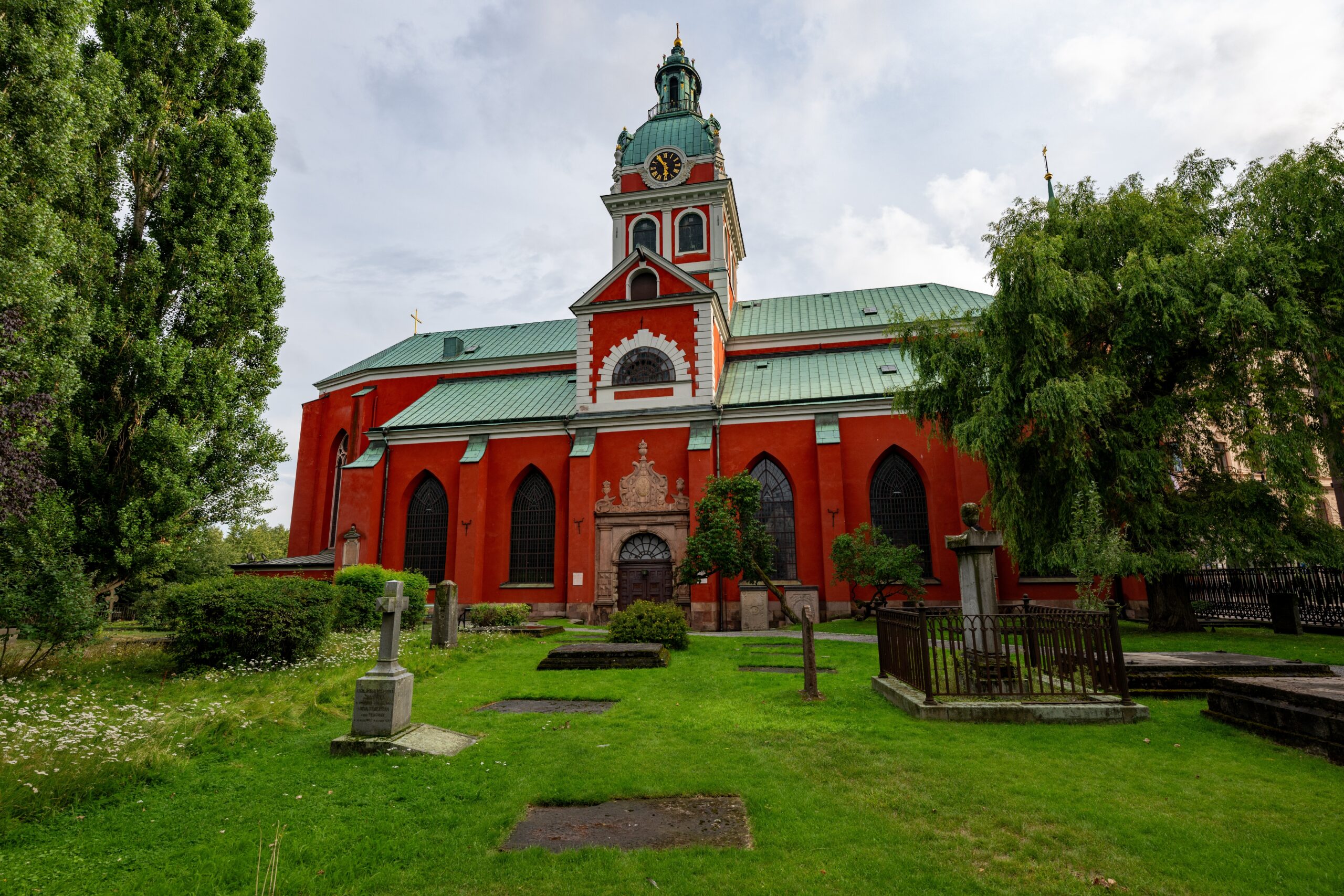
Saint Jacob (James) church in Stockholm, Sweden

Kristi Himmelsfärdsdag in Sweden: A Red Day, a Long Weekend and a Useful Swedish Word to Know

What is Kristi Himmelsfärdsdag?

If you are learning Swedish, sooner or later you will come across the long word Kristi himmelsfärdsdag. In English, it means Ascension Day.

In Sweden, Kristi himmelsfärdsdag is a röd dag, which means a public holiday or literally a “red day”. Public holidays are often called röda dagar in Swedish because they are traditionally marked in red in calendars.

For many people in Sweden, this day is associated with spring, extra time off and, quite often, the possibility of a longer weekend.

When is Kristi Himmelsfärdsdag?

Kristi himmelsfärdsdag is a movable holiday, which means that it does not fall on the same calendar date every year.

It is celebrated 40 days after Easter Sunday and therefore always falls on a Thursday.

In 2026, Kristi himmelsfärdsdag falls on Thursday, 14 May.

Why is it celebrated?

In the Christian tradition, Ascension Day commemorates the day when Jesus is believed to have ascended into heaven after his resurrection. According to Christian belief, this took place after he had appeared to his followers during the 40 days following Easter.

So, while Easter is connected to the resurrection of Jesus, Kristi himmelsfärdsdag specifically refers to the Ascension.

“Kristi flygare” – a more informal name

You may also hear the humorous or informal expression Kristi flygare in Swedish. This is a playful way of referring to Kristi himmelsfärdsdag, connected to the idea of “flying” or “going up”.

For Swedish learners, this is a good example of how Swedes sometimes shorten or play with long words in everyday language.

Useful Swedish vocabulary

Here are a few words and expressions worth learning:

Kristi himmelsfärdsdag –Ascension Day
röd dag- public holiday
helgdagholiday / public holiday
påskEaster
påskdagenEaster Sunday
torsdagThursday
ledighettime off
långhelglong weekend
klämdaga “squeeze day” between a holiday and the weekend

The word klämdag is especially useful. Since Kristi himmelsfärdsdag always falls on a Thursday, many people take the Friday off as well. This creates a four-day weekend. In Swedish, that Friday is often called a klämdag.

Why culture helps you learn Swedish

Learning a language is not only about grammar and vocabulary. It is also about understanding how people live, work, celebrate and communicate.

Swedish holidays such as Kristi himmelsfärdsdag help learners understand everyday references in conversations, workplace calendars, school schedules and public announcements. If you live in Sweden, work with Swedish colleagues or plan to use Swedish professionally, knowing these cultural terms can make communication much easier.

At InterLanguage, our Swedish courses are built around structured language development, personal attention and practical communication. Learners can study Swedish from beginner to advanced levels in a CEFR-based module system, with individual or small-group options.

A short language tip

The word himmelsfärdsdag may look difficult at first, but you can break it down:

himmel = heaven / sky
färd = journey / travel
dag = day

So, Kristi himmelsfärdsdag can be understood as “Christ’s journey-to-heaven day”.

Breaking long Swedish words into smaller parts is one of the most useful strategies for adult learners.

You can check Swedish word meanings, spelling and pronunciation on svenska.se, the official dictionary portal of the Swedish Academy.  

Final thought

Kristi himmelsfärdsdag is more than just a date in the Swedish calendar. It is a useful cultural and linguistic topic for anyone learning Swedish. It teaches you about Swedish public holidays, Christian traditions, everyday expressions and even the Swedish habit of creating long compound words.

And next time you see röd dag in a Swedish calendar, you will know exactly what it means.

Epiphany in Sweden

In Sweden, Epiphany (Trettondedag jul) is observed on January 6 and is an official public holiday, commonly referred to as a “red day”. The name trettondagen refers to the fact that January 6 falls on the thirteenth day of the Christmas period. In this calculation, Christmas Day on December 25 is counted as the first day of Christmas, meaning that Epiphany comes thirteen days after Christmas Eve. In most Christian countries, Epiphany marks the end of the Christmas season.

 In the Nordic countries, however, the Christmas period lasts longer. In Sweden, Christmas is traditionally concluded on tjugondedag jul, also known as St. Knut’s Day, which falls on January 13, twenty days after Christmas Eve.

From a historical perspective, Epiphany holds particular significance. In the early days of Christianity, January 6 was celebrated as the birthday of Jesus. In the 4th century, this celebration was moved to December 24 or 25. As a result, Epiphany is considered the oldest Christian feast. On January 6, the tradition commemorates the arrival of the eastern Magi – the Three Wise Men – in Bethlehem, where they are said to have brought gifts to Jesus: gold, frankincense, and myrrh.

Epiphany is a clear example of how language, history, and tradition are closely interwoven in Swedish culture, and how an ancient celebration continues to be observed today.

Semla: The Swedish treat

Our native Swedish teacher told us about one of their sweet treats:

“Semla is something we eat in Sweden before Lent. It is a sweet bun filled with an almond paste with a lot of whipped cream. This rich, extravagant treat is meant to be the feast before fasting (though most of us who eat these don´t continue with the fasting part….). So, the Swedish celebrate Lent with a Hungarian-looking pastry (képviselő fánk) with a German name – a nice symbol for how intertwined we are with other countries.”

Swedish “cosy Friday”

Our Swedish teacher told us about another interesting fact, which is about the concept of “Fredagsmys”, or Swedish “cosy Friday”.
Fredagsmys is about embracing a softer end to the working week, by heading home early to enjoy a feel-good, no-frills meal, followed by crisps or sweets on the sofa. Families usually watch TV or a movie together, with blankets and candles brought in as essential accessories during the long, dark winter.
For the past three decades, supermarket-bought taco shell or tortilla kits have been a go-to Friday night dish in Sweden, which is one of the biggest consumers of Mexican food in Europe. And tacos have become the core symbol of a much-loved Nordic ‘cosy Friday’ concept.
Fredagsmys has become a deep-rooted ritual that affords Swedes a weekly treat, while upholding the country’s strong family values and obsession with work-life balance.