Jokkmokk Winter Market: A Living Tradition of Northern Sweden

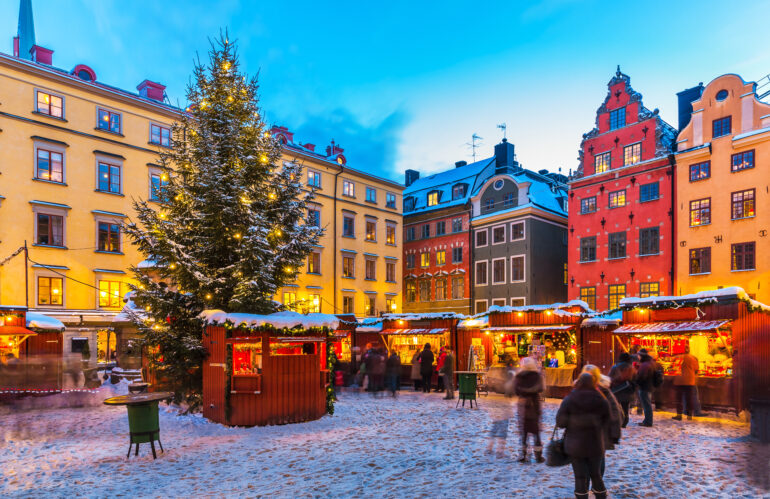
Every February, the small town of Jokkmokk in northern Sweden becomes the centre of one of the country’s oldest and most remarkable cultural events: the Jokkmokk Winter Market (Jokkmokks marknad).

The market was established more than 400 years ago and originally served as a practical meeting and trading place rather than a festive event. It was primarily an opportunity for the Sámi people to gather, exchange goods, and maintain social ties. Although it was not a celebration in the modern sense, people still wore their traditional festive clothing, highlighting the cultural importance of the occasion.

At the same time, the Swedish state played a strategic role in the creation of the market. King Karl IX and his officials wanted to inspect the goods traded by the Sámi population in order to collect taxes more efficiently. The local priest also used the opportunity to address the community from a religious perspective. To ensure control and organisation, the market was deliberately scheduled during the coldest period of the year. In the extreme winter conditions, people were forced to stay close to indoor spaces and warmth, making supervision easier.

Although this history may sound almost fictional today, historical sources confirm that economic reasons were central to the establishment of the market. At the time, Sweden was involved in several wars across Europe, and increased tax revenue was necessary to finance them. As a result, Jokkmokk became the location of a winter market held in the harsh Arctic climate.

Today, the Jokkmokk Winter Market always begins on the first Thursday of February and lasts for three days. Jokkmokk itself has fewer than 3,000 inhabitants, yet during the market the town welcomes approximately 30,000 to 40,000 visitors from Sweden and abroad. What began as a controlled trading post has evolved into a major cultural event celebrating Sámi traditions, handicrafts, music, food, and northern Swedish heritage.

International Mother Language Day – 21 February 2026

International Mother Language Day, observed annually on 21 February, was proclaimed by UNESCO to highlight the importance of linguistic diversity, cultural heritage, and language rights worldwide.

For a language school, this day carries particular significance: languages are not only tools for communication, but also bridges between cultures and foundations of lifelong learning.

Why is mother tongue education important in multicultural societies?

A person’s mother tongue shapes identity, thinking, and cultural belonging. International research and educational policies consistently show that strong mother tongue skills:

  • support overall academic success,
  • facilitate the acquisition of additional languages,
  • strengthen confidence and intercultural awareness.

In multicultural environments, recognising and valuing learners’ first languages is essential for inclusive and effective education.

How does multilingualism support learning?

Multilingualism offers well-documented cognitive benefits. It enhances memory, problem-solving abilities, and mental flexibility. Learners who consciously build on their mother tongue while studying foreign languages often develop a deeper understanding of linguistic structures and communication strategies.

Exploring the 2026 Göteborg Film Festival

The Göteborg Film Festival (often called GFF) is Scandinavia’s biggest annual film festival. Every year, it showcases hundreds of films — fiction, documentaries, shorts, and international works — from dozens of countries.

  • Date: January 23 – February 1, 2026
  • Location: Gothenburg (Göteborg), Sweden — and online options are often available too.
  • Films: Around 250 films from over 80 countries.

The festival includes a broad range of Nordic films — not just Swedish. You’ll see productions from Denmark, Norway, Finland, Iceland and beyond, all of which help you understand how Swedish fits in the wider Nordic culture.

This is a chance to learn cultural concepts that don’t always come up in textbooks — from social dynamics to storytelling styles, humor, and societal values.

Learn Real Swedish Through Film Dialogue

Movies are an amazing way to pick up language naturally:

  • hear everyday Swedish from native speakers
  • listen to different accents and registers
  • understand how Swedish is used in context

Plus, many films at Göteborg are subtitled in English, which makes them perfect for learners at intermediate and advanced levels!

The Film Festival isn’t just a cultural event — it’s a language learning opportunity. Whether you’re an intermediate learner curious about Swedish culture, or an advanced student looking for real-world listening practice, this festival gives you a cinematic passport into the Nordic countryside of language and storytelling.

Winter Adventures in Sweden

As winter settles over Sweden, the landscape transforms into a snowy wonderland that captivates both locals and visitors alike. The cold season brings ideal conditions for outdoor pursuits and winter sports. From the archipelago around Stockholm to the snow-packed expanses of Swedish Lapland, winter is not a time to hide indoors — it’s a time to embrace the cold and explore.

Cross-Country Skiing

Cross-country skiing holds a special place in Swedish culture, enjoyed by people of all ages and skill levels. The sport combines endurance, grace and outdoor adventure, and is easily accessible through trails across the country. For many, participating in Vasaloppet — the world’s oldest and most iconic long-distance cross-country ski race — is a hallmark winter ambition. The race spans approximately 90 km from Sälen to Mora and attracts thousands of skiers each year.

Ice Skating on Lakes and Rivers

When the colder months freeze Sweden’s countless lakes and waterways, they become natural arenas for ice skating — a beloved winter pastime. From casual gliding in Stockholm to long-distance Nordic skating across frozen surfaces, this sport offers both tranquility and exhilaration in equal measure. Guided tours and safety equipment are recommended for outdoor routes.

Ice Hockey and Curling

Team sports also thrive during the Swedish winter. Ice hockey is hugely popular, with local teams, enthusiastic crowds and a strong national presence in international competitions. Alongside hockey, curling — a strategic ice sport — draws attention during winter months and has seen Sweden field competitive teams in international championships.

Dog Sledding and Snowmobiling

For those seeking adventure, dog sledding through snow-covered forests and across frozen lakes is an unforgettable experience. Sweden’s husky-led sled tours offer both tranquillity and excitement, immersing participants in nature at its purest. Snowmobile safaris provide an alternative way to explore the Arctic backcountry with speed and energy.

Ice Fishing and Snowshoeing

Swedes also enjoy more traditional winter pursuits like ice fishing — a serene yet challenging activity that often tests patience and resilience in the cold. Exploring snow-covered terrain on snowshoes gives adventurers access to pristine wilderness areas and untouched forests.

Embracing Winter the Swedish Way

From the rhythmic glide of cross-country skiing to the joyful spin of ice skating, Sweden’s winter sports scene captures the spirit of Nordic culture: active, outdoors-oriented, and deeply connected to nature. Whether you’re an athlete, an adventurer, or simply someone who enjoys crisp winter air, Sweden offers a rich tapestry of winter experiences worth discovering

Epiphany in Sweden

In Sweden, Epiphany (Trettondedag jul) is observed on January 6 and is an official public holiday, commonly referred to as a “red day”. The name trettondagen refers to the fact that January 6 falls on the thirteenth day of the Christmas period. In this calculation, Christmas Day on December 25 is counted as the first day of Christmas, meaning that Epiphany comes thirteen days after Christmas Eve. In most Christian countries, Epiphany marks the end of the Christmas season.

 In the Nordic countries, however, the Christmas period lasts longer. In Sweden, Christmas is traditionally concluded on tjugondedag jul, also known as St. Knut’s Day, which falls on January 13, twenty days after Christmas Eve.

From a historical perspective, Epiphany holds particular significance. In the early days of Christianity, January 6 was celebrated as the birthday of Jesus. In the 4th century, this celebration was moved to December 24 or 25. As a result, Epiphany is considered the oldest Christian feast. On January 6, the tradition commemorates the arrival of the eastern Magi – the Three Wise Men – in Bethlehem, where they are said to have brought gifts to Jesus: gold, frankincense, and myrrh.

Epiphany is a clear example of how language, history, and tradition are closely interwoven in Swedish culture, and how an ancient celebration continues to be observed today.

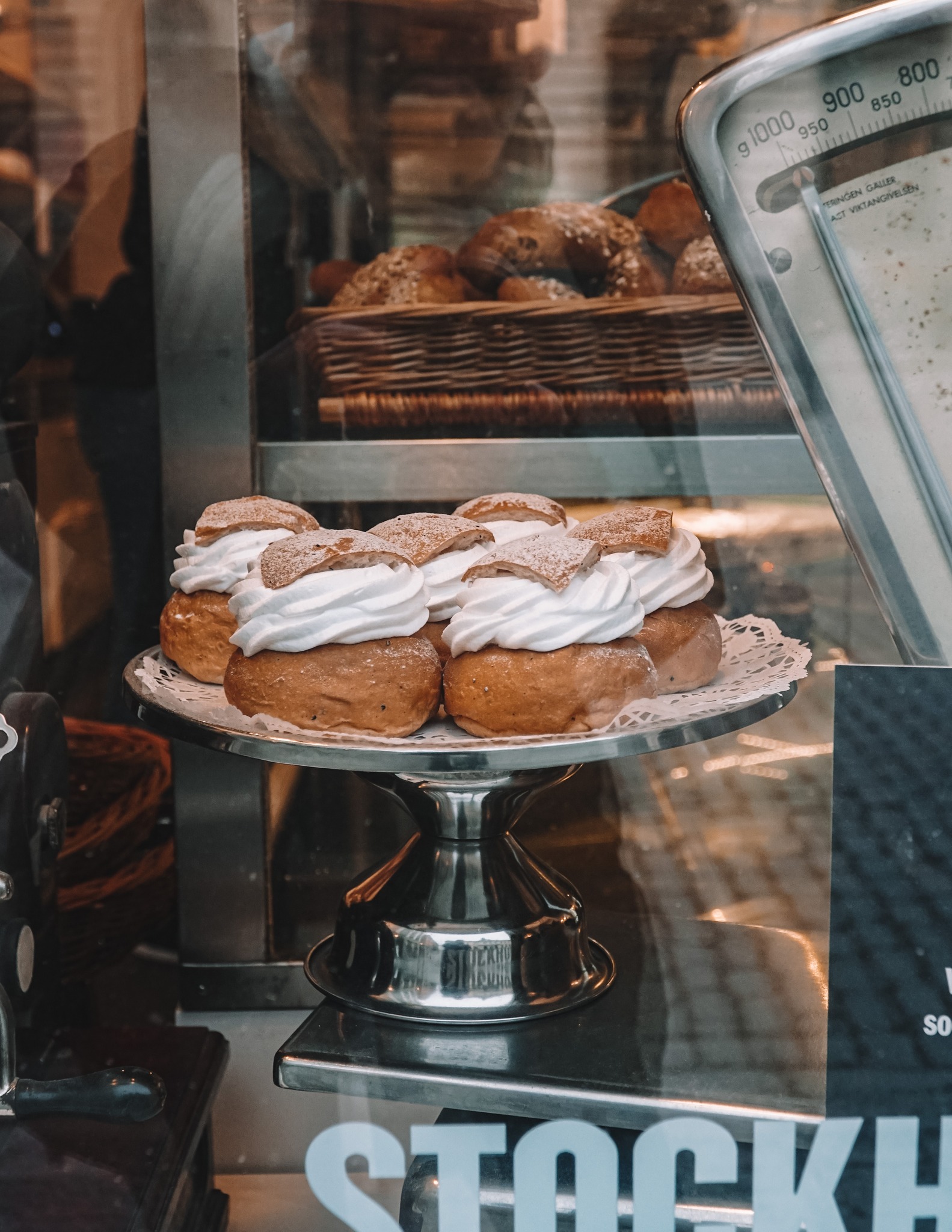
Semla: The Swedish treat

Our native Swedish teacher told us about one of their sweet treats:

“Semla is something we eat in Sweden before Lent. It is a sweet bun filled with an almond paste with a lot of whipped cream. This rich, extravagant treat is meant to be the feast before fasting (though most of us who eat these don´t continue with the fasting part….). So, the Swedish celebrate Lent with a Hungarian-looking pastry (képviselő fánk) with a German name – a nice symbol for how intertwined we are with other countries.”

“Höstmys”: The Swedish Autumn Coziness

“‘Höstmys,’ a beautiful Swedish concept, embodies the essence of autumn coziness. This expression symbolizes how one can find the simple joys of autumn. As the temperatures drop and nature’s colors transform, ‘höstmys’ takes center stage in the lives of Scandinavians and those who appreciate the magic of the fall season.

This phenomenon means more than just a word: it represents a lifestyle. Scandinavians seek refuge within the warmth and comfort of their homes, creating a sanctuary from the outdoor chill. Candlelight fills the rooms, casting a warm and inviting glow that envelops the living space. The atmosphere it creates is serene, peaceful, and conducive to togetherness, as loved ones gather to share in the joy of autumn.

The ‘höstmys’ period is a time to snuggle under soft blankets, savor hot tea or coffee, and relish the aroma and taste of autumn flavors. Whether it’s a quiet evening by the fireplace or a stroll in the woods, the ‘höstmys’ concept teaches a deep appreciation for the beauty and tranquility of autumn. It reminds us to slow down, enjoy the moment, and find happiness in the cozy embrace of this special season.”

Swedish “cosy Friday”

Our Swedish teacher told us about another interesting fact, which is about the concept of “Fredagsmys”, or Swedish “cosy Friday”.
Fredagsmys is about embracing a softer end to the working week, by heading home early to enjoy a feel-good, no-frills meal, followed by crisps or sweets on the sofa. Families usually watch TV or a movie together, with blankets and candles brought in as essential accessories during the long, dark winter.
For the past three decades, supermarket-bought taco shell or tortilla kits have been a go-to Friday night dish in Sweden, which is one of the biggest consumers of Mexican food in Europe. And tacos have become the core symbol of a much-loved Nordic ‘cosy Friday’ concept.
Fredagsmys has become a deep-rooted ritual that affords Swedes a weekly treat, while upholding the country’s strong family values and obsession with work-life balance.

Swedex Examination Center

We are thrilled to announce that starting in July 2024, the InterLanguage Language Center has officially become a Swedex examination center, the first in Hungary!  This means that you can now take the international Swedish language exam with us at A2/B1 and B2/C1 levels.

Becoming a Swedex exam center is a significant milestone for our language school, as Swedish language teaching has always been one of our specialties, attracting learners from 25 other countries besides Hungary. Now, we offer even more opportunities, as those learning Swedish can also take their language exams with us.

We welcome everyone to our Swedex exams as well as our general and specialised Swedish language courses! 

Swedish Language Courses | InterLanguage

#SwedexSuccess #SwedexCertification #Swedex